Khulq-e-Azeem: Noble Character for Class 8 Pupils
Khulq-e-Azeem means noble character, the kind of conduct that earns trust and respect without any show or pretence. For Class 8 pupils, it is not an abstract idea from a lesson page. It shows in how you speak to a classmate, how you treat a younger pupil, how you answer a teacher, and how you behave when nobody is watching. This guide explains Khulq-e-Azeem through everyday conduct, speech, and patience in school life, so you can practise it in small, real steps. You will find clear examples, a simple daily check, and ways to improve without pretending to be perfect. Read it alongside your STBB book and discuss the ideas with your teacher.
What Khulq-e-Azeem Really Means
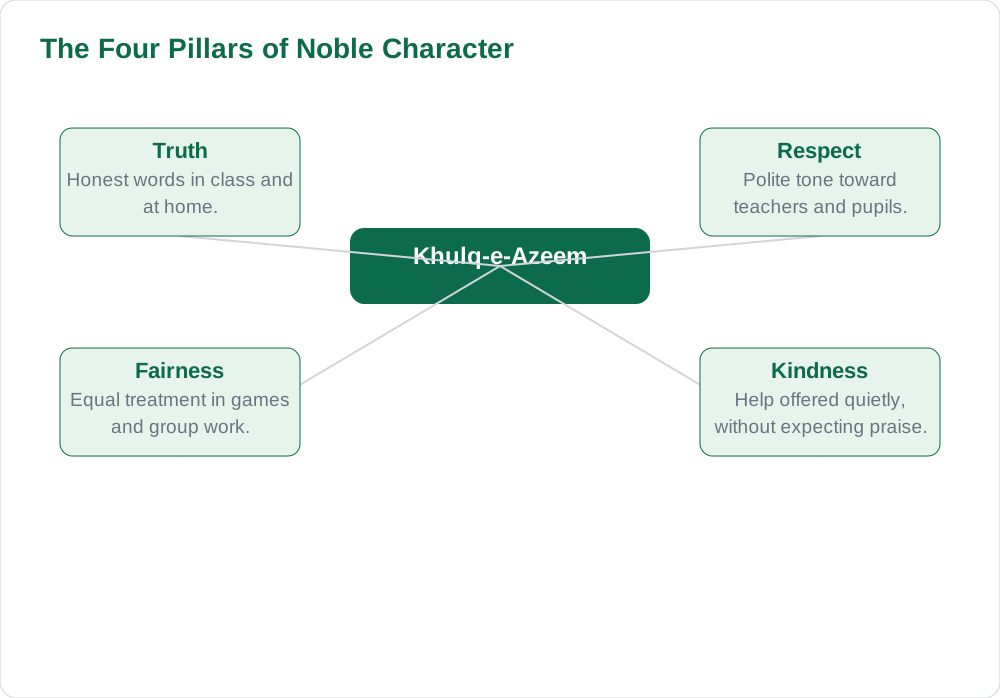
Khulq-e-Azeem describes character that is steady, kind, and honest in every situation. It is not about using polite words only when a teacher is near. It means the same pupil is respectful in class, fair in games, and truthful at home. When character is noble, people feel safe around you because your words and actions agree.
For Class 8 pupils, the test is often small. Do you return a lost pen or admit a mistake instead of blaming a friend? These moments matter more than big speeches. Character grows through repeated small choices. The solved notes can help you revise the lesson.
- Truthful speech: say what happened, even when it is uncomfortable.
- Respectful tone: disagree without shouting, mocking, or insulting.
- Fair behaviour: take your fair share and leave room for others.
- Kind action: help without waiting to be asked or praised.
Noble Character in Speech
Speech is the clearest window into character. A pupil with noble character greets others warmly, asks questions politely, and avoids hurtful jokes. When angry, such a pupil pauses before speaking rather than using words that wound. This pause is a skill, and it improves with practice. You can learn to say, I need a moment, instead of replying in anger.
Noble speech also means keeping promises. If you cannot keep one, explain early and honestly. Reliable words build trust and make group work easier.
Noble Character in School Conduct
Conduct in school includes queueing fairly, caring for classroom property, and following rules even when supervision is light. A pupil with noble character does not copy homework, damage a desk, or laugh at a struggling classmate. Instead, that pupil offers help, shares materials, and accepts correction without argument. These habits show maturity far more than high marks alone.
Teachers notice conduct quickly, but the real reward is personal. When you behave well without being watched, you build self-respect. You also make the classroom a better place for pupils who feel shy or slow. If you want more lesson support, explore the books section and use the blog for study guides.
- Queue fairly and wait your turn without pushing.
- Care for shared books, desks, and classroom materials.
- Accept correction calmly and correct the mistake.
- Include classmates who are often left out of games.
Patience as Part of Noble Character
Patience is a quiet part of Khulq-e-Azeem. School life gives many chances to practise it: waiting for your turn, working through a hard problem, or dealing with a classmate who annoys you. Patience does not mean staying silent when something is wrong. It means choosing a calm response instead of a harsh one, and speaking at the right time.
You can practise patience with a simple routine. When you feel rushed or irritated, take three slow breaths and name the problem in one sentence. Then decide the fair next step. This habit helps in exams too, because a calm mind reads questions more carefully. Patience, like honesty, becomes easier each time you choose it.
A Daily Check for Noble Character
At the end of the school day, ask yourself four short questions. Was I truthful today? Was I respectful in speech? Was I fair to others? Did I help someone without being asked? You do not need to score yourself harshly. One honest answer is enough to guide tomorrow. If you slipped, plan one small repair, such as apologising or returning something.
Share this check with a friend or family member if it helps you stay honest. Character grows best when it is practised openly and reviewed gently. Keep your lesson notes organised, and revisit the companion guide on patience in school life when you want to strengthen the patience side of noble character.
AI Help: Muse AI
Muse AI is Meta's personal AI assistant, and it can help you practise noble character by role-playing polite replies to tricky classroom situations. Muse AI does not give official STBB answers — always verify against your STBB book and your teacher. Always check any lesson summary against your Sindh Textbook Board book before using it in class.
Join Muse with invite code LTGSWD — in the Muse app, go to Settings > Redeem token and enter the code.
Disclosure: LTGSWD is the author's Muse invite code.
5 key points you must know
- Khulq-e-Azeem means noble character shown in speech, conduct, and patience.
- Truthful speech builds trust faster than any excuse or pretence.
- Fair conduct in class shows maturity as much as good marks.
- Patience helps you respond calmly instead of reacting harshly.
- A short daily check turns noble character into a steady habit.
Frequently asked questions
What does Khulq-e-Azeem mean for a Class 8 pupil?
It means noble character in daily life: honest speech, respectful tone, fair conduct, patience, and quiet kindness toward classmates, teachers, and family members.
How can I practise noble character at school?
Start small: tell the truth, queue fairly, care for shared property, include left-out classmates, and apologise promptly when you make a mistake.
Does noble character mean never disagreeing?
No. It means disagreeing politely, listening to the other side, and choosing words that explain your view without mocking or shouting.
How is patience connected to noble character?
Patience keeps speech and conduct calm under pressure, so you can choose a fair response instead of reacting in anger during exams, games, or disagreements.
Solved notes — preview free
These guides work best with the solved exercises. Preview the solved notes free on this website — 119 solved notes for Classes 6–10 in Sindhi, Urdu, English and Arabic medium. Or browse the full solved notes catalogue for your class and medium. New solved notes are added regularly — check the catalogue for coming-soon books.