The Makkah Period of Seerat: Lessons in Patience
The Makkah period Seerat patience lessons teach pupils how the earliest Muslims held firm through years of hardship. In Makkah, the Prophet (PBUH) called people to one God, truthfulness, and good character. The message was simple and clear, yet it challenged old habits and powerful interests. Many who accepted it faced mockery, hardship, and loss. This guide traces those early years and shows how patience, faith, and gentle teaching carried the community through difficulty. Pupils will learn that patience is not passive waiting, but steady, faithful effort in the face of pressure.
The Early Call in Makkah
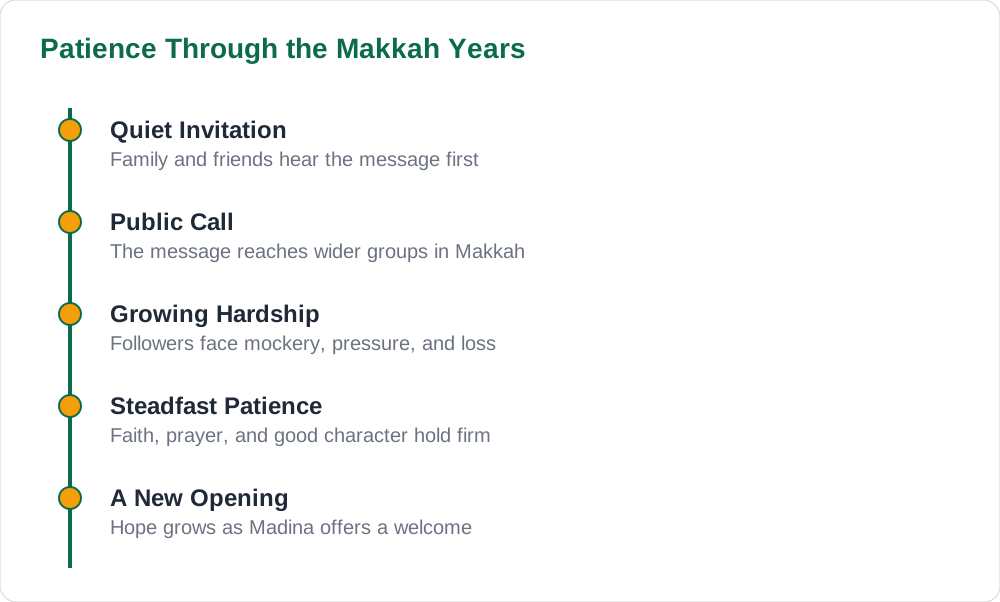
The early call in Makkah began quietly, with family, friends, and trusted companions. The Prophet (PBUH) invited people to worship one God, speak the truth, care for the weak, and live with justice. The teaching was gentle and personal, built on character and trust. Pupils should notice that the message spread first through good conduct and sincere conversation.
As the call became public, opposition grew. Leaders who feared change resisted the message and pressured its followers. Yet the Prophet (PBUH) continued with wisdom, answering questions calmly and refusing to return cruelty for cruelty. This early stage teaches pupils that truth needs both courage and kindness.
- The call began with close family and trusted friends.
- Good character and honesty supported the message.
- Public preaching brought both interest and opposition.
- Calm wisdom answered hostility without cruelty.
Hardship and Patience
Hardship in Makkah tested the early Muslims in many ways. Some lost trade, some lost status, and some faced physical harm. Families were divided, and daily life became uncertain. Patience in this period meant staying firm in faith while continuing to act with dignity and kindness.
The Prophet (PBUH) modelled patience by refusing to abandon the message or to answer persecution with hatred. He prayed, consoled his companions, and reminded them of Allah's help. Pupils can learn that patience includes prayer, steady effort, and keeping good manners even when others are unkind.
The Boycott and Steadfastness
One of the hardest trials was a boycott that cut the Prophet's (PBUH) family and followers off from trade and social contact. Food and support became scarce, and daily life grew very difficult. The community endured this hardship together, sharing what little they had and refusing to give up their faith.
Steadfastness during the boycott teaches pupils that patience is stronger when it is shared. Families, friends, and companions supported one another. In school life, the same idea applies: study groups, honest friendships, and kind teachers help pupils endure pressure without losing hope. See the Hijrat lessons for what followed this period.
- The boycott cut off trade and social support.
- Sharing and mutual help kept the community going.
- Steadfastness meant faith plus practical care for others.
- Shared patience is stronger than patience alone.
Gentle Teaching and Character
Even under pressure, the teaching in Makkah stayed gentle and clear. The Prophet (PBUH) spoke with truth, patience, and respect. He did not force belief or use fear as a tool. His conduct showed that the message and the manner of delivering it must match.
Pupils can apply this lesson to their own communication. Speaking truthfully, listening to others, and refusing to mock or bully are acts of character. Good manners are not a small extra in Seerat study. They are part of the message itself, and they shape how others receive what we say.
What Pupils Can Learn Today
Patience today may look different, but the principle is the same. Exams, family pressure, and peer conflict all test steadiness. Pupils who prepare calmly, ask for help, and keep good manners show the same patience in a school setting. Small daily choices build the character that larger trials require.
To study this period well, summarise each stage in your own words and name one value it teaches. Keep your notes short and honest. You can find study help in the solved notes and browse related Seerat lessons to connect the Makkah period with later events.
AI Help: Muse AI
Muse AI is Meta's personal AI assistant. It can help you summarise the Makkah period in simple language, list the values shown in each stage, or turn your notes into short practice questions on patience. Muse AI does not give official STBB answers — always verify against your STBB book and your teacher. Always check your notes against your Sindh Textbook Board book and your teacher's guidance.
Join Muse with invite code LTGSWD — in the Muse app, go to Settings > Redeem token and enter the code.
Disclosure: LTGSWD is the author's Muse invite code.
5 key points you must know
- The Makkah period shows patience as steady faith plus good conduct under pressure.
- The early call spread through character, trust, and gentle teaching.
- Hardship and boycott tested the community, but shared support kept it firm.
- The Prophet (PBUH) answered hostility with wisdom rather than cruelty.
- Pupils practise the same patience in study, manners, and daily challenges.
Frequently asked questions
What is the Makkah period of Seerat?
It is the early stage of the Prophet's (PBUH) mission in Makkah, when the call to one God began quietly and then became public. It was marked by teaching, opposition, hardship, and steadfast patience.
Why did the early Muslims face opposition?
The message challenged old habits, unfair practices, and powerful interests. Some leaders feared losing influence, so they mocked and pressured the followers. The community answered with patience and good character.
What does patience mean in the Makkah period?
Patience meant staying firm in faith while continuing to act well. It included prayer, steady effort, kind manners, and mutual support, not passive waiting or giving up.
How can pupils study the Makkah period?
Summarise each stage in your own words, name the value it teaches, and connect it to school life. Short notes, timelines, and teaching the story to a friend all help memory.
Solved notes — preview free
These guides work best with the solved exercises. Preview the solved notes free on this website — 119 solved notes for Classes 6–10 in Sindhi, Urdu, English and Arabic medium. Or browse the full solved notes catalogue for your class and medium. New solved notes are added regularly — check the catalogue for coming-soon books.