Analysing a Sindhi Afsana: Story and Message
A Sindhi afsana is a short story that feels like a slice of real life. It may describe a village, a school, a family, or a market, but underneath the simple events it carries a message about how people behave. The skill of analysing Sindhi afsana story message means going beyond retelling the plot. You need to show who the characters are, what problem they face, how the story builds tension, and what the ending teaches the reader. Many pupils lose marks because they only summarise what happened. This guide gives you a clear four-part method: character, conflict, turning point, and message. With this frame, you can analyse any afsana in your Sindhi textbook and write answers that are organised, thoughtful, and easy for an examiner to follow.
Start With a Short Plot Summary
Every analysis begins with a short summary, but it must stay short. Aim for five to seven sentences that cover the beginning, the middle, and the end. Name the main character, the place, and the central problem in the first two sentences. Then describe two or three important events that move the story forward. Finish with the ending and its result. Do not retell every small detail. The examiner already knows the story. Your summary exists only to show that you understood the main line of events. A good test is to read your summary aloud. If a classmate who has not read the story can follow it, your summary is clear enough. If your summary is longer than half your answer, cut it down and leave room for analysis.
While writing the summary, use your own words rather than copying sentences from the textbook. Copying shows memory, but rephrasing shows understanding. Keep the order of events the same as the story, and do not add events that never happened. If the story uses flashbacks or memories, mention them briefly without confusing the main timeline. For example, you can write that the hero remembers his childhood before he makes his decision. This keeps your summary honest and easy to follow. You can check the story text in your class book through the books page before you start writing.
Understand the Characters
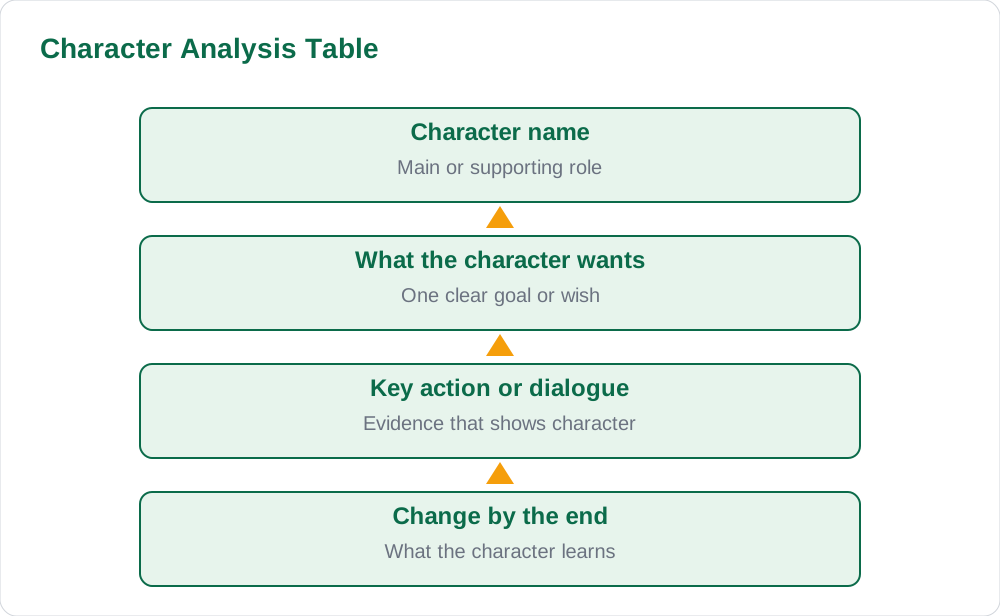
After the summary, study the characters. Every afsana has a main character who carries the story, and one or two supporting characters who test or help that character. Ask three questions about the main character: what does he or she want, what kind of person is he or she, and what changes by the end. A character may want respect, money, freedom, forgiveness, or a better life for the family. The character traits appear through actions and speech, not only through the narrator telling you. If a character shares food with a stranger, that action shows kindness more strongly than any adjective. Look for one or two short actions or dialogues that prove each trait you mention. This evidence makes your analysis convincing.
Supporting characters also deserve attention. A friend, a parent, a teacher, or a neighbour often represents a different way of thinking. When two characters disagree, the story shows two values side by side. For example, one character may choose honesty while another chooses an easy shortcut. Comparing the two helps you explain the theme of the story. Do not describe every minor character. Choose the one or two who change the story. If a character appears only once and changes nothing, mention the character briefly or leave the character out. Your analysis should stay focused on the characters who shape the meaning of the afsana.
Find the Conflict and the Turning Point
Every good afsana has a conflict, which is a problem that must be solved. The conflict may be between two people, between a person and society, between a person and poverty, or between a person and his own fear. Name the conflict in one sentence. For example, the hero must choose between telling the truth and protecting his friend. A clear conflict sentence gives your analysis direction. Next, trace how the conflict grows. The writer adds small problems, misunderstandings, or pressures that make the choice harder. Notice how the tension rises. The reader begins to wonder what the character will do. This rising tension is what makes a short story interesting even when the events are ordinary.
The turning point is the moment when the character makes a decision or something unexpected happens. After this point, the story moves toward its ending. The turning point may be a confession, a refusal, a kindness, or a sudden discovery. In your answer, point to the turning point clearly and explain why it matters. Ask what would have happened if the character had chosen differently. This question shows that you understand cause and effect in the story. Many exam questions ask why the ending happened. The answer almost always lies in the turning point. If you can explain that moment well, your analysis will look strong and thoughtful.
Explain the Ending and the Message
The ending of an afsana is rarely just an ending. It is the place where the message becomes clear. Read the final paragraph slowly and ask what the writer wants you to feel. Is the ending happy, sad, surprising, or thoughtful. A sad ending can still carry a hopeful message, and a happy ending can still warn the reader. Describe the ending in two or three sentences, then state the message in one sentence. For example, the story teaches that honesty may be hard at first but brings lasting peace. Support your message with one detail from the ending. If the hero sleeps peacefully after telling the truth, that detail proves the message of peace. Without such evidence, a message sounds like a guess.
Some stories carry more than one message. A story about a poor student may teach both the value of hard work and the value of kindness from a teacher. You may mention a second message briefly, but keep one main message at the centre of your answer. Avoid forcing a moral that the story does not support. If the story ends with an open question, say so honestly. Some modern afsane leave the reader thinking instead of giving a direct lesson. In that case, your message sentence can describe the question the writer leaves behind. This honest reading earns more marks than a forced moral that does not fit the text.
Writing a Clear Afsana Analysis Answer
A good exam answer follows a simple order: short summary, characters, conflict and turning point, then message. Use a new paragraph for each part and give each paragraph a clear first sentence. The first sentence tells the examiner what the paragraph will prove. For example, the main conflict of the story is between honesty and friendship. The rest of the paragraph then explains that conflict with evidence. Keep your language simple and direct. Long, complicated sentences hide your ideas. Short sentences make your thinking visible. If you use a quotation from the story, keep it short and explain it in your own words immediately. A quotation without explanation does not prove anything.
Practise this method with one afsana at a time. Read the story, fill the character table, name the conflict, mark the turning point, and write the message sentence. Then write a full answer in about two pages. After writing, check that every paragraph answers the question and that no paragraph only retells the story. The guide on Sindhi folk tales uses a similar message-first approach for older tales, and the solved notes page can help you compare your answer with solved material. With steady practice, analysing an afsana becomes a habit rather than a fear.
- Summary first, but keep it under seven sentences.
- Prove each character trait with one action or dialogue.
- Name the conflict in one clear sentence.
- Point to the turning point and explain its result.
- State the message in one sentence with evidence.
AI Help: Muse AI
Muse AI is Meta's personal AI assistant, and it can help with naming the conflict and turning point of a Sindhi afsana you have already read. Muse AI does not give official Sindh Textbook Board answers — always verify against your Sindh Textbook Board book and your teacher.
Join Muse with invite code LTGSWD — in the Muse app, go to Settings > Redeem token and enter the code.
Disclosure: LTGSWD is the author's Muse invite code.
5 key points you must know
- Keep the plot summary short and in your own words.
- Analyse characters through actions and speech, not labels alone.
- Name the conflict in one clear sentence.
- Identify the turning point that leads to the ending.
- State the message with one piece of evidence from the story.
Frequently asked questions
How long should an afsana analysis answer be?
For school exams, about two pages is usually enough: a short summary, one paragraph on characters, one on conflict, and one on the message.
Should I retell the whole story in my answer?
No. A short summary is enough. The rest of your answer should analyse characters, conflict, and message with evidence.
What if I am unsure about the message?
Re-read the ending and the turning point. The message usually becomes clear where the character makes a choice and faces its result.
Can a story have more than one message?
Yes, but keep one main message at the centre and mention a second message only briefly with evidence.
Solved notes — preview free
These guides work best with the solved exercises. Preview the solved notes free on this website — 119 solved notes for Classes 6–10 in Sindhi, Urdu, English and Arabic medium. Or browse the full solved notes catalogue for your class and medium. New solved notes are added regularly — check the catalogue for coming-soon books.