An Introduction to Sachal Sarmast's Poetry for Pupils
Sachal Sarmast is known as the poet of love and truth. His verses speak of a love that crosses walls of pride, hatred, and division. For pupils, the Sachal Sarmast poetry introduction pupils need is not a long biography. It is a clear picture of his message: love all people, speak the truth with kindness, and keep the heart free from hatred. Sachal wrote in Sindhi, Punjabi, and other languages, and his poetry is still sung across Sindh. This guide introduces his life in brief, explains his main ideas with short verse examples, and shows how pupils can write about his poetry in school answers. His message is simple to state and deep to practise, which is why it stays alive in schools and shrines.
Who Was Sachal Sarmast
Sachal Sarmast lived in Sindh and is remembered as a poet and thinker who loved truth more than fame. He is often called Sarmast, which means absorbed or lost in love. People gave him this name because his poetry shows a heart fully absorbed in love for truth and for humanity. He travelled, met people from many backgrounds, and wrote verses that welcome everyone. His poetry does not belong to one group. It speaks to farmers, students, traders, and seekers alike. In school, pupils meet short selections from his poetry. Those selections are enough to understand his message if they are read slowly and carefully.
Sachal wrote in several languages because he believed truth does not belong to one tongue. His Sindhi verses are musical and direct. They use images of the heart, the beloved, the tavern of love, and the mirror of the soul. Pupils should not be confused by these images. The heart means the inner self. The mirror means honest self-knowledge. The tavern of love means the company of sincere people. When you meet such an image, ask what human quality it describes. That question unlocks the meaning. The guide on reading Sindhi poetry shows how to work through one beit at a time, which is the best way to read Sachal.
Love as the Centre of His Poetry
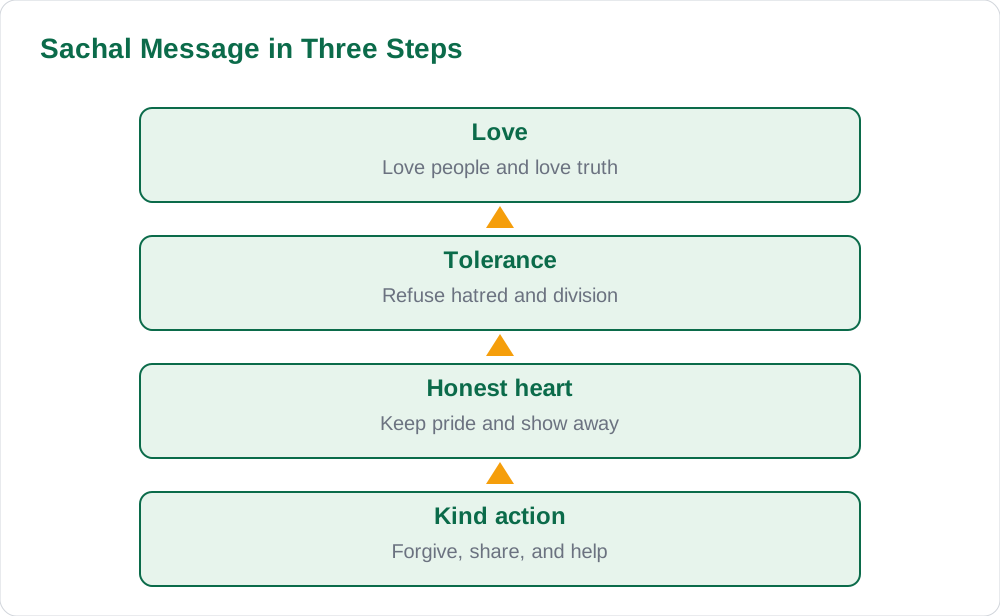
Love is the centre of Sachal poetry. For Sachal, love is not only feeling. It is action. A loving person forgives, shares, and refuses to hate. Many verses describe love as a fire that burns selfishness and pride. When pride burns away, the heart becomes soft and open. Pupils can understand this image through daily life. A pupil who forgives a classmate after a quarrel practises the same softness Sachal praises. A pupil who shares food with a new student practises the same love. These small acts are the living meaning of his verses. In an exam answer, connect the verse image to one such daily example. The connection shows real understanding.
Sachal love also includes love for truth. He teaches that a person who loves truth does not hide behind show or fear. Such a person speaks honestly, keeps promises, and stands with the weak. This honesty takes courage. Pupils often think courage means fighting. Sachal teaches that a deeper courage is telling the truth kindly when silence would be easier. When you write about his love theme, mention both sides: love for people and love for truth. Together they explain why his poetry feels both gentle and brave.
Tolerance: Refusing Hatred and Division
The second great idea in Sachal poetry is tolerance. Tolerance means living with people who think, pray, or speak differently, without hatred. Sachal teaches that no one should be judged only by outward labels. What matters is the heart. His verses warn against people who use religion or pride to divide others. He calls such division a disease of the heart. For pupils, tolerance begins in the classroom. It means respecting a classmate from another village, language, or background. It means listening before judging. It means refusing to join teasing or bullying. These habits are the school version of Sachal tolerance.
In exam answers, pupils should state tolerance in one clear sentence and support it with one verse image. For example, if a verse says that the same light shines in every heart, the pupil can explain that the light means human dignity shared by all. Avoid writing that Sachal rejected all rules or all traditions. His message was not careless freedom. It was love guided by truth. He respected sincere faith and sincere practice. He opposed only pride, hatred, and show. This balanced reading keeps your answer honest and close to the textbook.
Short Verses, Deep Meanings
Sachal verses are often short, but their meanings are deep. A single line about the heart can carry three lessons: know yourself, love others, and speak truth. To study such a verse, read it three times. The first reading gives you the words. The second reading gives you the image. The third reading gives you the lesson. Write the lesson in one sentence in your own words. Then ask whether the verse describes a feeling, an action, or a warning. Most Sachal verses describe one of these three. A feeling verse speaks of longing or joy. An action verse calls for forgiveness or sharing. A warning verse cautions against pride or hatred. Naming the type helps you organise your answer.
Compare Sachal with Shah Latif to see both poets more clearly. Shah Latif often tells a story of a heroine on a journey. Sachal often speaks directly to the heart without a long story. Both poets praise love, sincerity, and courage, but Sachal voice is more direct and questioning. The guide on Shah Latif themes explains the journey image that dominates Shah Latif. Reading both guides together helps pupils answer comparison questions, such as how the two poets treat love differently. Keep the comparison short: one similarity and one difference, each with one example.
How to Write About Sachal in Exams
A good exam answer on Sachal follows a simple order. First, name the verse and its image in one or two sentences. Second, state the message in one sentence: love, tolerance, or truth. Third, explain the image in your own words. Fourth, add one lesson for daily life. For example, a verse about the mirror of the heart can be answered as the image of looking honestly at oneself, the message of truth, and the lesson of admitting mistakes. This four-step answer is complete and easy to mark. Avoid writing a long biography when the question asks about a message. A brief line about Sachal as the poet of love is enough.
Practise with one verse at a time. Choose a short verse from your textbook, write the image, the message, and the daily lesson, and ask your teacher to check your sentences. If your teacher says your message is too general, add one concrete detail from the verse. General answers say love is good. Strong answers say this verse teaches that love removes pride, shown by the image of fire burning selfishness. That detail is what earns marks. You can find Sachal selections in your class book through the books page. Read them aloud slowly, and let the simple words do their deep work.
- Name the verse image in one or two sentences.
- State the message as love, tolerance, or truth.
- Explain the image in your own words.
- Add one daily-life lesson with a concrete example.
- Keep biography short when the question asks about a message.
AI Help: Muse AI
Muse AI is Meta's personal AI assistant, and it can help with explaining one Sachal verse image, such as the mirror of the heart, in simple pupil language. Muse AI does not give official Sindh Textbook Board answers — always verify against your Sindh Textbook Board book and your teacher.
Join Muse with invite code LTGSWD — in the Muse app, go to Settings > Redeem token and enter the code.
Disclosure: LTGSWD is the author's Muse invite code.
5 key points you must know
- Sachal is the poet of love, truth, and tolerance.
- Love for Sachal means action: forgiving, sharing, and refusing hatred.
- Tolerance means respecting people who differ from us.
- Read each short verse three times: words, image, lesson.
- Exam answers need image, message, and one daily lesson.
Frequently asked questions
Why is Sachal called Sarmast?
Sarmast means absorbed in love. People gave him this name because his poetry shows a heart fully absorbed in love for truth and humanity.
What is the main message of Sachal poetry?
Love all people, keep the heart free from hatred and pride, and speak the truth with kindness.
How is Sachal different from Shah Latif?
Shah Latif often teaches through heroine stories and journeys. Sachal often speaks directly to the heart with short, questioning verses.
Can I write about Sachal without long philosophy?
Yes. Explain one image, state one message, and give one daily-life example. That is enough for a strong school answer.
Solved notes — preview free
These guides work best with the solved exercises. Preview the solved notes free on this website — 119 solved notes for Classes 6–10 in Sindhi, Urdu, English and Arabic medium. Or browse the full solved notes catalogue for your class and medium. New solved notes are added regularly — check the catalogue for coming-soon books.