Ghazwat in Class 9 Seerat: Lessons and Context
The Ghazwat Seerat lessons class 9 pupils study are often remembered only as battles, yet their real value lies in context, leadership, and moral choice. The word Ghazwat refers to the expeditions and defensive encounters that took place after the Hijrat, when the young Muslim community in Madina had to protect itself, its agreements, and its freedom to worship. Pupils should not study these events as stories of fighting alone. Each one carries lessons about patience, discipline, justice, mercy, and trust in Allah. This guide gives a clear overview, explains why context matters, and helps you learn the Ghazwat with understanding rather than memorised detail.
What the Word Ghazwat Means
In Seerat study, Ghazwat refers to the military expeditions associated with the Prophet's (PBUH) leadership in Madina. Some were defensive responses to threats, and others were journeys that ended without fighting. The term therefore covers a wider range of events than one pitched battle. Pupils should begin by asking what each event was for, not only what happened on the field.
Understanding the word helps pupils avoid a narrow view. The Ghazwat were part of protecting a new community, its agreements, and its right to live by its faith. They were guided by rules, leadership, and moral limits. That wider picture is what makes the lessons useful for study and character today.
- Ghazwat means expeditions led in defence of the Madina community.
- Not every expedition ended in fighting or a pitched battle.
- Each event had a purpose, a context, and a moral lesson.
- Rules and restraint mattered even in times of conflict.
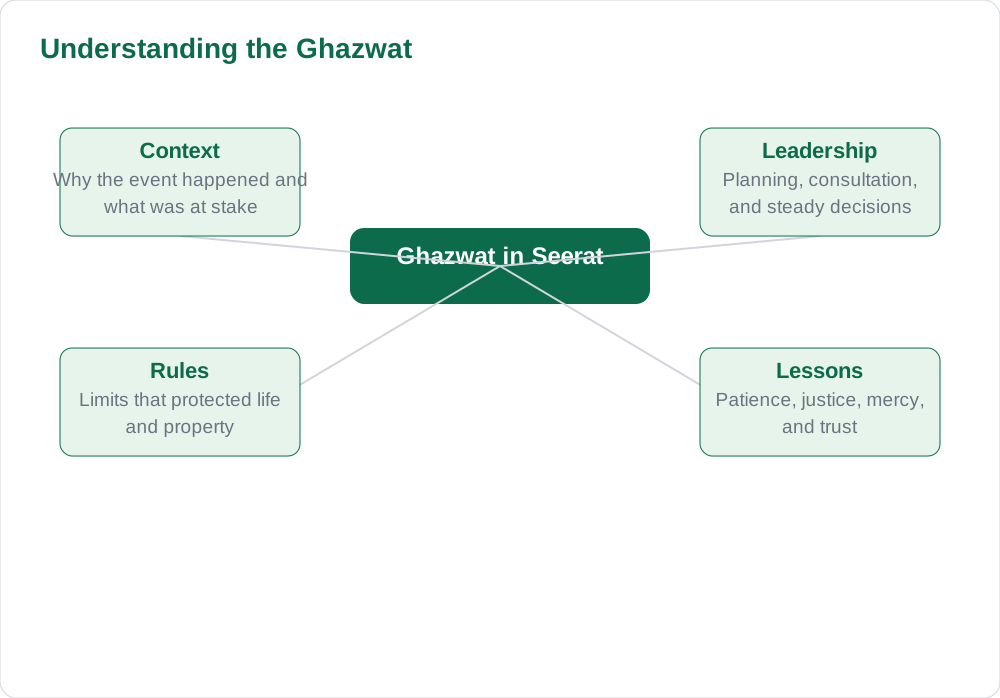
Why Context Matters More Than Battle Detail
Without context, the Ghazwat can look like a list of names and places. With context, each event becomes understandable. Pupils should ask who was threatened, what agreements were involved, and what peaceful options had been tried. Those questions turn a battle story into a lesson about responsibility and leadership.
Context also prevents unfair judgments. The Muslim community in Madina was small and surrounded by pressure. Its actions were shaped by the need to survive, keep promises, and protect the weak. When you read your book, underline the causes first, then the course of events, and finally the results and lessons.
Leadership and Values in the Ghazwat
The Prophet (PBUH) led with consultation, planning, and care for his companions. Decisions were not rushed. Scouts were sent, plans were discussed, and the welfare of the community was weighed. Pupils can learn that good leadership means listening, preparing, and taking responsibility for the outcome.
Discipline and unity were equally important. Companions were expected to follow instructions, protect one another, and avoid quarrels. When discipline weakened, the community paid a price. For pupils, this is a clear link to class life: teamwork, listening to guidance, and staying united help every group succeed. See the Seerat community lessons for how Madina was organised.
- Consultation helped leaders hear advice before deciding.
- Planning reduced risk and protected the community.
- Discipline kept the group united under pressure.
- Responsibility meant caring for people, not seeking glory.
Mercy Even in Conflict
One of the most important lessons of the Ghazwat is that mercy did not disappear in conflict. The Prophet (PBUH) set limits on harm, protected non-combatants, and treated captives with dignity. Prisoners were fed, and many were released with kindness. Pupils should notice how restraint and mercy remained part of leadership even in the hardest moments.
Forgiveness after conflict also mattered. Victory was not used for revenge. The aim was peace, justice, and a stable community. This teaches pupils that strength is not shown by cruelty. Real strength is shown by fairness, self-control, and the willingness to forgive when peace becomes possible.
How Pupils Can Study the Ghazwat Well
Study one event at a time using a simple frame: cause, leadership, conduct, result, and lesson. Write two or three sentences for each part in your own words. Avoid copying long battle descriptions. Focus on why the event happened and what it teaches about character and community.
Then compare events gently. Ask which values repeat across them, such as patience, courage, or mercy. Discuss your answers with a classmate or teacher. You can also browse related Seerat lessons and the books page to keep your revision grounded in your Class 9 Seerat book.
AI Help: Muse AI
Muse AI is Meta's personal AI assistant. It can help you turn a Ghazwa into a simple cause-and-lesson summary, build a comparison table for revision, or draft practice questions about leadership and mercy. Muse AI does not give official STBB answers — always verify against your STBB book and your teacher. Always check your notes against your Sindh Textbook Board book and your teacher's guidance.
Join Muse with invite code LTGSWD — in the Muse app, go to Settings > Redeem token and enter the code.
Disclosure: LTGSWD is the author's Muse invite code.
5 key points you must know
- The Ghazwat were expeditions that protected the Madina community and its freedom.
- Context explains why each event happened and what values were at stake.
- Leadership meant consultation, planning, discipline, and care for companions.
- Mercy and restraint remained important even in times of conflict.
- Pupils learn most by studying causes, conduct, results, and moral lessons.
Frequently asked questions
What does Ghazwat mean in Class 9 Seerat?
It refers to the expeditions led during the Prophet's (PBUH) time in Madina. Some involved fighting, while others ended peacefully. Each one should be studied for its purpose, context, and lesson.
Why should pupils study context before battle detail?
Context explains who was threatened, what agreements mattered, and why action was taken. Without it, the events become a list of names. With it, pupils learn leadership, justice, and responsibility.
What moral lessons do the Ghazwat teach?
They teach patience, discipline, courage, justice, mercy, and trust in Allah. They also show that strength includes restraint, fair treatment of captives, and forgiveness when peace becomes possible.
How can pupils revise the Ghazwat without memorising long details?
Use a short frame for each event: cause, leadership, conduct, result, and lesson. Write brief notes in your own words, then compare the values that repeat across events.
Solved notes — preview free
These guides work best with the solved exercises. Preview the solved notes free on this website — 119 solved notes for Classes 6–10 in Sindhi, Urdu, English and Arabic medium. Or browse the full solved notes catalogue for your class and medium. New solved notes are added regularly — check the catalogue for coming-soon books.